Lab Grown Diamonds: Everything You Need to Know Before You Buy in 2026
There was a time when owning a diamond meant compromising on size, saving for years, or settling for something smaller than what you truly wanted. That era is quietly coming to an end. Lab grown diamonds have moved from being a niche alternative to becoming one of the most searched, most purchased, and most talked-about categories in Indian fine jewellery today.
At Amiora Diamonds, we believe every buyer deserves brilliance without compromise — whether that means budget, ethics, or quality. In this guide, we break down exactly what lab grown diamonds are, how they compare to mined diamonds, what's driving their explosive growth in 2026, and how to buy one with total confidence.
What Are Lab Grown Diamonds?
Lab grown diamonds (also called lab-created or laboratory-grown diamonds) are real diamonds — chemically, physically, and optically identical to mined diamonds. The only difference lies in their origin story. Instead of forming over billions of years deep within the earth, they're grown inside advanced laboratories over a matter of weeks, using technology that replicates the natural diamond-growing process.
They carry the same carbon crystal structure, the same 10/10 Mohs hardness rating, and the same fire and brilliance as their mined counterparts. In fact, telling a lab grown diamond apart from a natural one with the naked eye is virtually impossible — even trained gemologists rely on specialised equipment to do so.
How Are Lab Grown Diamonds Made?
There are two primary methods used to grow diamonds in a controlled environment:
1. HPHT (High Pressure High Temperature): This method recreates the intense heat and pressure conditions found deep in the earth's mantle, compressing carbon into diamond crystals.
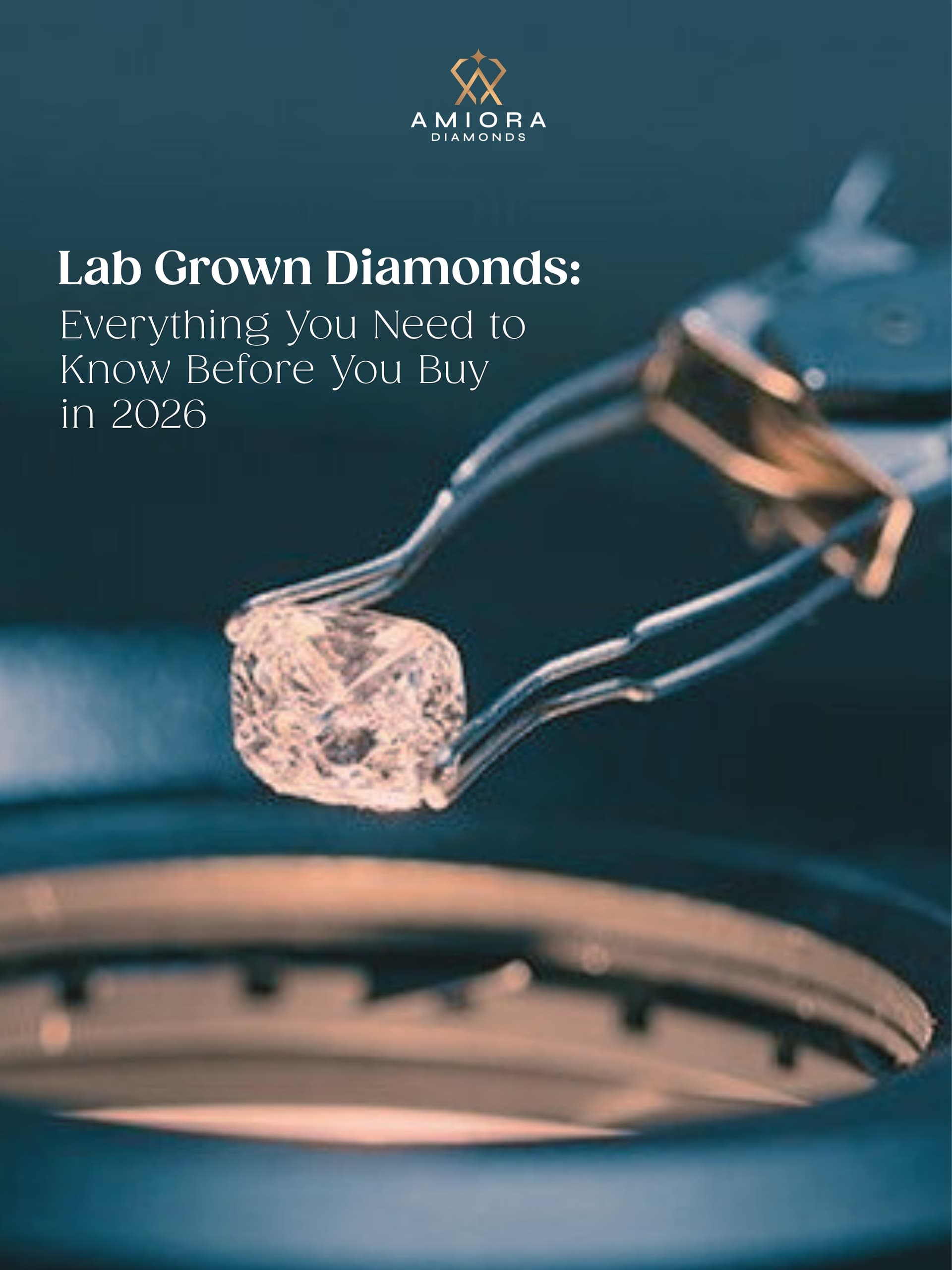
2. CVD (Chemical Vapour Deposition): A carbon-rich gas is introduced into a chamber containing a diamond seed. As the gas breaks down, carbon atoms accumulate layer by layer on the seed, gradually forming a full diamond crystal.
CVD has become the dominant technique for jewellery-grade diamonds because it offers superior consistency, better control over colour and clarity, and the ability to scale production without compromising quality. This is one of the biggest reasons prices have become so accessible over the last few years.
Why Lab Grown Diamonds Are Booming in 2026
The numbers tell a compelling story. India's lab grown diamond jewellery market is projected to grow at a robust double-digit annual rate over the coming decade, with rings alone accounting for over a third of total demand — driven largely by engagement and bridal purchases. Several forces are converging to fuel this shift:
• Affordability without compromise: A certified 1-carat lab grown diamond in India typically costs a fraction of what an equivalent natural stone would — often 60–80% less, depending on cut, colour, and clarity.
• Mainstream validation: Major legacy jewellery houses have entered the lab grown space in a big way, lending the category unprecedented credibility and pulling it firmly into the mainstream.
• Clearer regulation: Updated Bureau of Indian Standards terminology rules now require clear labelling — “laboratory-grown diamond” or “laboratory-created diamond” — so buyers always know exactly what they're purchasing.
• Changing buyer psychology: Today's buyer isn't asking “Can I afford a diamond?” anymore — they're asking “How often can I wear one?” That shift has reshaped how Indians build their jewellery collections.
• India's manufacturing edge: India already handles the vast majority of the world's lab grown diamond polishing, with hubs like Surat emerging as global manufacturing centres.
Are Lab Grown Diamonds “Fake”? Let's Clear the Confusion
This is, without question, the most common question we hear — and the answer is simple. No, lab grown diamonds are not fake, and they are nothing like cubic zirconia or moissanite. Those are diamond simulants with a completely different chemical composition. A lab grown diamond is pure carbon, arranged in the exact same crystal lattice as a mined diamond. It scratches glass, refracts light identically, and comes with the same internationally recognised certification. The only thing lab grown about it is where it was formed — not what it is.
The Sustainability Story
For an increasingly conscious generation of buyers, sustainability is no longer a nice-to-have — it's a deciding factor. Traditional diamond mining involves significant land excavation, water usage, and ecological disruption. Lab grown diamonds, by contrast, require a fraction of the land and water footprint, without the community and environmental concerns historically associated with mining operations.
This doesn't mean lab grown diamonds have zero environmental cost — the energy-intensive growing process still has an impact. But for many urban, environmentally-aware buyers, especially younger consumers making their first fine jewellery purchase, the reduced footprint is a meaningful point in favour of choosing lab grown.
What's Trending in Lab Grown Diamond Jewellery Right Now
The Indian buyer of 2026 isn't chasing one big statement piece anymore — they're building a considered, versatile collection. The current trend lines include:
• Minimalist, everyday wear — thin bands, delicate solitaires, pieces you forget you're wearing
• Fancy shapes — oval and pear-cut stones are overtaking round brilliants in engagement ring searches
• Hidden halo settings — a discreet ring of smaller diamonds beneath the centre stone that adds visible sparkle without bulk
• Toi-et-Moi rings — the two-stone design symbolising partnership, hugely popular for engagements
• Warm metal settings — yellow gold pairings are back in fashion alongside classic white gold and platinum
• Stackable bands — buyers are choosing multiple thinner pieces over one heavy design
• Rewearable bridal sets — bridal jewellery designed to transition seamlessly into daily wear after the wedding
At Amiora Diamonds, our collections are designed around exactly this philosophy — pieces that are precious enough for your milestone moments and light enough for your everyday life.
How to Buy a Lab Grown Diamond: A Quick Buyer's Checklist
1. Always ask for certification. IGI (International Gemological Institute) or SGL certification confirms the diamond's carat, cut, colour, and clarity — non-negotiable for any serious purchase.
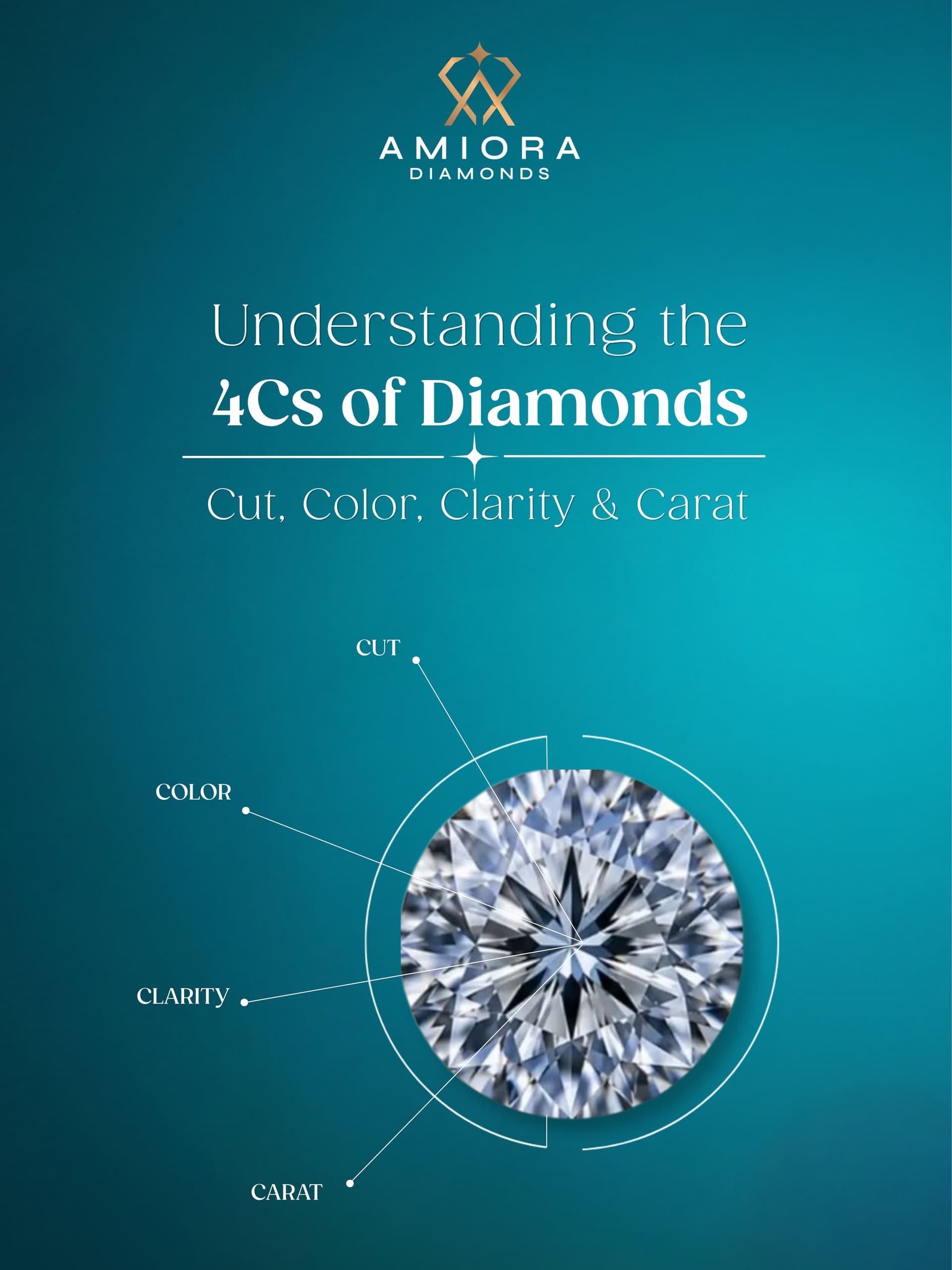
2. Understand the 4Cs. Cut affects brilliance more than any other factor — a well-cut smaller stone will almost always outshine a poorly cut larger one.
3. Choose your metal wisely. Platinum and white gold suit colourless (D–F) stones best, while yellow gold pairs beautifully with the G–H “sweet spot” range.
4. Verify the manufacturing method. CVD-grown diamonds currently dominate the market for their consistency and value; HPHT stones are prized for exceptional colour purity in specific cases.
5. Buy from a transparent brand. Look for full disclosure on sourcing, certification, and after-sales support.
Why Choose Amiora Diamonds?
At Amiora Diamonds, we've built our brand on the belief that fine jewellery should be honest, accessible, and genuinely wearable. Every lab grown diamond in our collection is certified, ethically sourced, and crafted with the same precision and care as a natural diamond piece — because to us, brilliance shouldn't come with a compromise.
Whether you're shopping for an engagement ring, a gift for someone special, or simply your first fine jewellery investment in yourself, Amiora Diamonds offers a curated range designed to fit real lives — not just special occasions.
Frequently Asked Questions
Are lab grown diamonds real diamonds?
Yes. They share the same chemical composition, hardness, and optical properties as mined diamonds. The only difference is where and how they're formed.
How much cheaper are lab grown diamonds compared to natural ones?
Typically 60–80% more affordable than a natural diamond of comparable carat, cut, colour, and clarity.
Do lab grown diamonds have resale value?
Currently, resale value is low compared to natural diamonds. They're best purchased to wear and enjoy rather than as a financial investment.
Is certification necessary for lab grown diamonds?
Absolutely. Always insist on IGI or SGL certification to confirm authenticity and quality grading.
Will lab grown diamonds lose value or trend over the next few years?
Prices have broadly stabilised after a period of rapid supply expansion, meaning today's buyers are purchasing at a more predictable, mature price point than in previous years.
Final Thoughts
Lab grown diamonds have fundamentally changed what's possible for the modern Indian jewellery buyer — bigger stones, better designs, and prices that make sense for real life, not just once-in-a-lifetime moments. As certification standards tighten and awareness grows, the choice is no longer about compromise; it's about smarter, more conscious luxury.
Explore the Amiora Diamonds collection today and discover a diamond that's certified, beautiful, and made for the way you actually live.